
NEWS
Traditional PET Film vs PE Protective Layer PPF Film: Which Is Better & Key Differences?

As the paint protection film (PPF) industry continues to evolve, installers and distributors are paying more attention not only to TPU quality and adhesive performance, but also to the protective layer structure used during transportation and installation.
Traditionally, most PPF products use a PET top protective film, while newer solutions increasingly adopt a PE protective layer, especially for installation efficiency improvements.
This raises an important question:
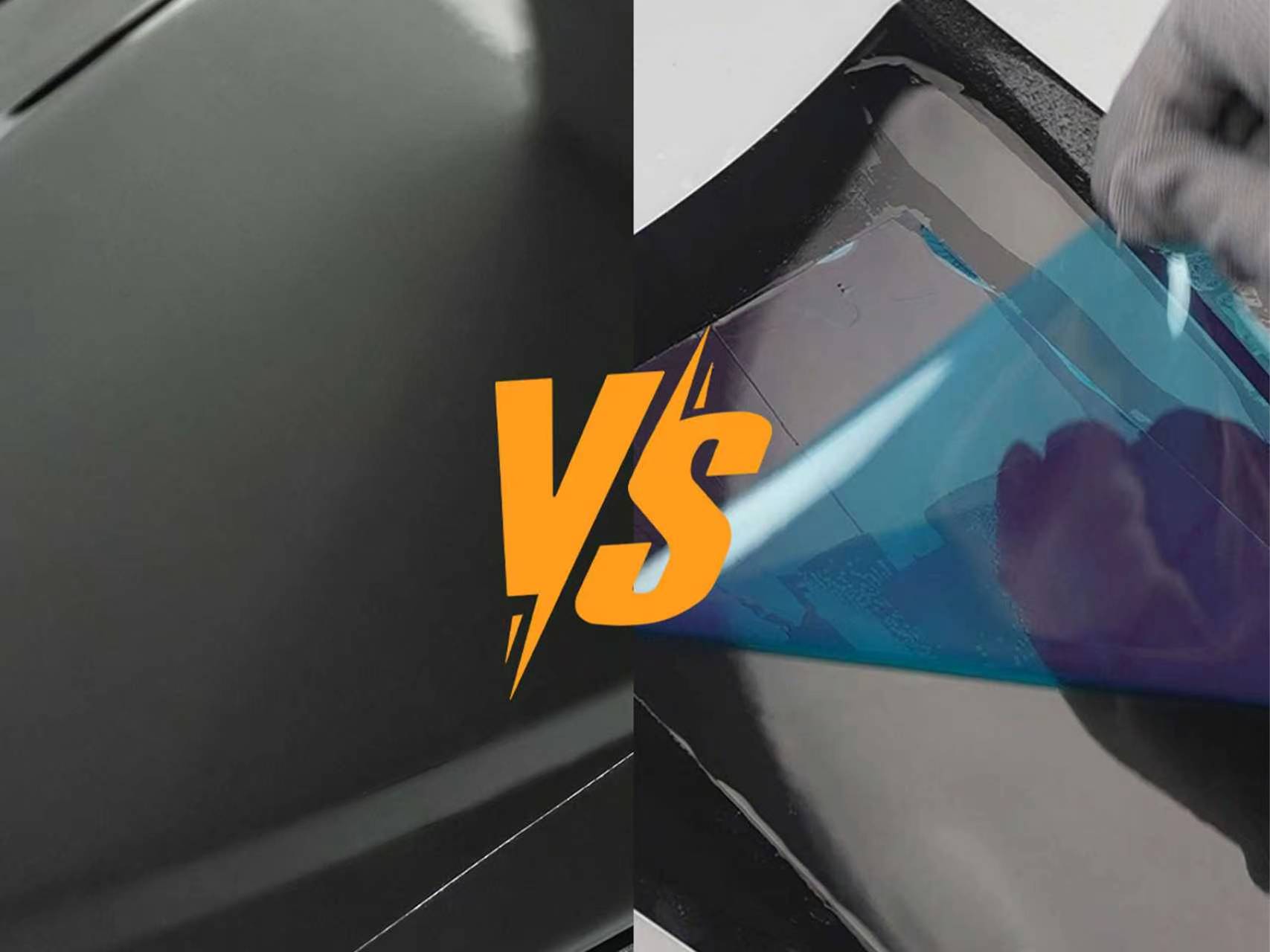
What are the real differences between traditional PET film and PE protective layer PPF film? Which one is better?
The answer is not simply about better or worse — it depends on installation habits, workflow preferences, and business needs.
What Is Traditional PET Film in PPF?
https://www.facebook.com/reel/2724265181302571/
https://www.instagram.com/reel/DZumkkdjRQb/
Traditional PPF structures commonly include a PET (Polyethylene Terephthalate) protective top film designed to protect the coating surface during manufacturing, transportation, and storage.
A standard structure often looks like this:
PET Protective Film → Coating Layer → TPU Film → Adhesive → Release Liner
PET protective film is widely used because it offers:
-
- Good surface protection during transportation
-
- Stable dimensional performance
-
- Strong scratch resistance during storage
-
- Familiar installation workflow for experienced installers
However, during installation, many PET-protected films require the top protective layer to be removed before plotter cutting or template cutting.
This means installers may need to add an extra preparation step before application.
What Is PE Protective Layer PPF?
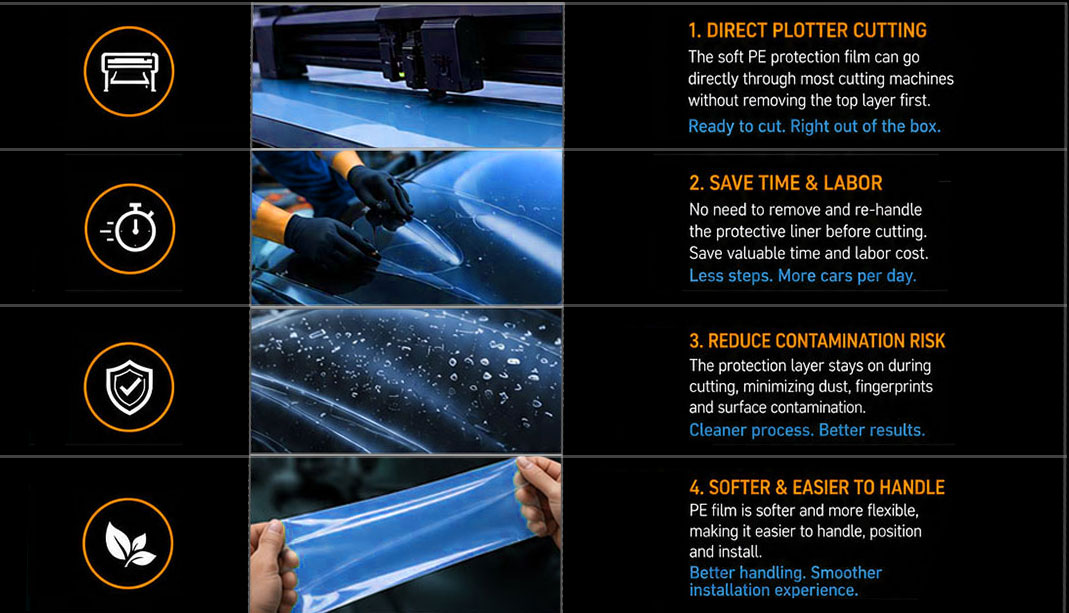
PE (Polyethylene) protective layer PPF is a newer installation-oriented solution developed to improve workshop efficiency.
Instead of using a traditional PET top protective film, the film utilizes a softer and more flexible PE protective layer, designed to remain on the surface during cutting in many installation environments.
Typical structure:
PE Protective Layer → Coating Layer → TPU Film → Adhesive → Release Liner
One major advantage is workflow simplification.
For many installers, the film can often be:
Loaded → Plotter Cut → Installed
without removing the protective layer beforehand.
This helps reduce unnecessary handling during busy workshop operations.
Traditional PET Film vs PE Protective Layer PPF: Key Differences
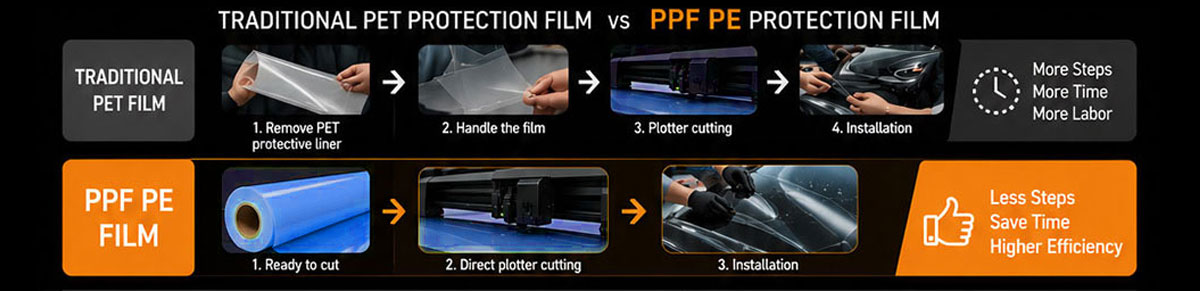
1. Installation Workflow
Traditional PET Film
Most traditional PET-protected PPF products require installers to:
-
- Remove the top protective layer
-
- Prepare the film for cutting
-
- Perform plotter cutting
-
- Begin installation
This process is familiar to many experienced installers.
PE Protective Layer
PE protective layer PPF is designed for a faster workflow.
In many cases:
-
- Direct plotter cutting is possible
-
- Less pre-installation preparation is required
-
- Faster turnaround for workshops handling multiple vehicles daily
For installers focused on efficiency, this can improve operational productivity.
2. Flexibility During Installation
PET protective film is generally more rigid and stable.
PE protective layer materials tend to be softer and more flexible, which may improve handling during certain installation processes, particularly around curves or repositioning situations.
Installer preference often plays a role here.
Some professionals prefer traditional rigidity, while others value flexibility and speed.
3. Surface Protection During Transportation
Traditional PET film has long been valued for reliable surface protection during logistics and storage.
PE protective layers also provide protective performance, while placing additional emphasis on installation convenience.
The balance between transportation protection and installation efficiency can influence product selection.
4. Cutting Machine Compatibility
One important difference appears in plotter operation.
Many PE protective layer PPF products are designed to work directly with cutting machines without first removing the protective surface layer.
This may help:
-
- Reduce installation time
-
- Lower handling complexity
-
- Improve consistency in busy workshops
-
- Reduce contamination risks from excessive handling
For businesses processing high installation volume, this can become an operational advantage.
Which Is Better: Traditional PET Film or PE Protective Layer PPF?
The short answer:
Neither is universally better. The best choice depends on your priorities.
Traditional PET Film May Be Better If You:
-
- Prefer a conventional installation workflow
-
- Already have standardized shop procedures
-
- Prioritize long-established installation habits
-
- Want familiar material handling
PE Protective Layer PPF May Be Better If You:
-
- Want faster installation workflow
-
- Use plotter cutting frequently
-
- Need higher workshop efficiency
-
- Handle multiple installations daily
-
- Prefer reduced preparation steps
Ultimately, both systems are designed to protect automotive paint — they simply approach installation differently.
Final Thoughts
When comparing traditional PET film vs PE protective layer PPF film, the conversation should not be about which one is superior.
Instead, it is about:
Which solution better matches your installation style and operational needs.
Traditional PET film remains a proven and trusted option across the global PPF market.
PE protective layer PPF, on the other hand, represents a newer approach focused on workflow optimization, cutting convenience, and installation efficiency.
For distributors, installers, and workshops, choosing the right product often comes down to one question:
Do you prefer traditional familiarity or faster installation efficiency?
In the end, there is no absolute winner — only different choices for different business goals.